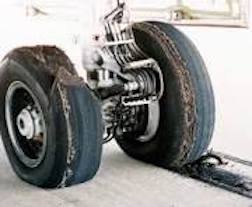
April 19, 1985: Brakes lock and a tire blows as Discovery ends its landing at the Kennedy Space Center.
*****
Forty years ago today, April 19, 1985, the SWAT team is returning at the end of the 16th Shuttle mission. With Bo Bobko at the controls along with pilot Don Williams, Discovery swings around the “Hack,” the Heading Alignment Circle, and lines up with Runway 33 at the Kennedy Space Center. Crosswinds are striking the Shuttle from the right at 10 mph. This is the first landing in a crosswind, that at 8:54 a.m. (EDT) touchdown, blows Discovery 19 ft. to the left of the runway centerline. The Shuttle then drifts 65 ft. left of centerline. By applying more pressure to the right-wheel brakes — called differential steering — Bobko steers the Orbiter back to the center. He needs to apply about twice the force to the right brakes than the left, and about 134 ft. before stopping, the inboard right brakes lock. Five feet from stopping, the right outboard brakes lock and the inboard tire blows with a popping sound heard in the cabin.
Bobko later said, “There was never any doubt about being able to track down the centerline once we got back on it. . . . It was obvious there wasn’t going to be any problem stopping.”
Yet the incident causes NASA to restrict landings to the wide spaces of Edwards Air Force Base in California until a system of nose wheel steering can be installed in the Orbiters. That doesn’t happen until just before the Challenger accident.
*
In the hindsight of forty years the 16h Shuttle flight can appear emblematic of the STS program. The flight featured a remarkable skill and improvisation to attempt to save the Syncom satellite, showing the system flexibility. The landing showed how fragile and experimental the Shuttle remained nearly three years after being declared “operational.”
And the landing also provided a chilling portent of the future:
A tile, probably loosened at launch, on the left outboard elevon (flap) allowed heat to penetrate the structure during the reentry. The elevon’s aluminum carrier plate melted. The tile itself fell off during landing and was found near the runway.
Bobko said, “It was probably comforting that we didn’t know there was a hole in the wing.”
*
We’ve marked the anniversaries of every U.S. piloted space mission. (I resist using the word “crewed” as it sounds like “crude.” And none of these flights was crude. Can anyone on this planet think of a better word?) And they’re all here for you to experience again in this crude blog.
So this presents the perfect moment to conclude our anniversary-by-anniversary replay of each flight. And switch to a less rigid format for looking at the history and meaning of the space program. The journey continues.
 tlitiptree